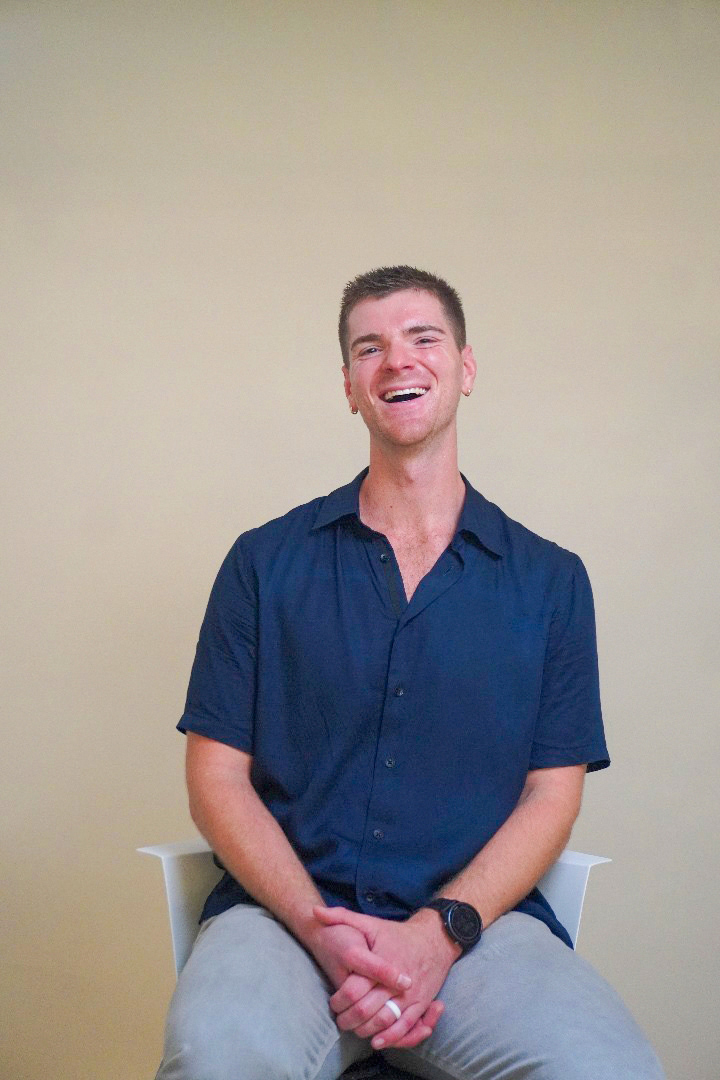
I'm a design strategist who designs and leads for coordination within complex systems need to move from plan to action: the workshops, the sensemaking tools, the facilitated sessions, the teamwork.
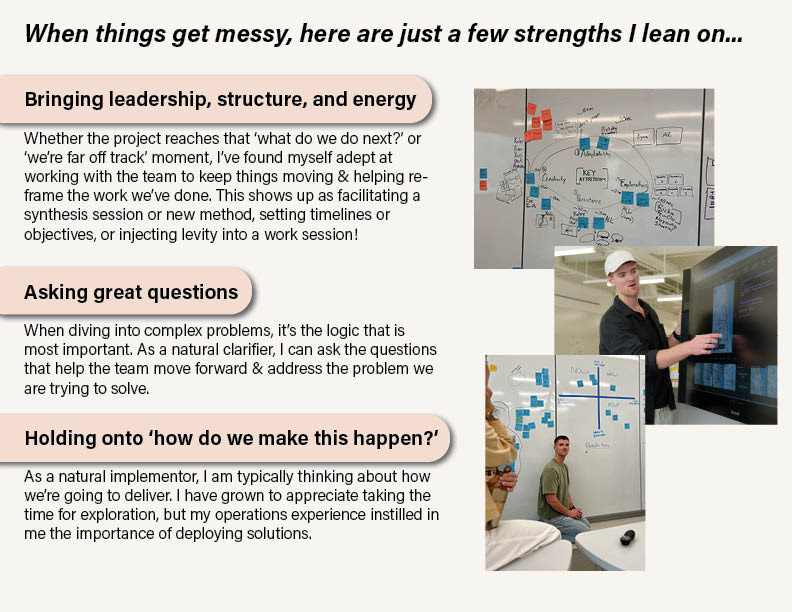
I use facilitation to get the right people in a room and moving together. I use workshop design and systems visualization to help people recognize themselves as well as see where they stand relative to others in a system. I use storytelling and prototyping to make a more participatory future feel concrete enough to move toward, rather than just remaining as theoretical.
I'm guided by my values of collaboration, community, and excellence.
Where I'm looking to go
I'm in my final semester at the Institute of Design, and the through-line of my work is clear: I want to enable the conditions that support the coordination of people inside complex systems that no single organization or citizen could navigate alone.
Two applications of this energize me right now:
One is civic: helping everyday people make sense of the systems that govern their lives — government, deliberation, decision-making — and feel like participants in them rather than bystanders.
The other is physical: making cities and streets more human-centered, so people see their neighborhoods as places they have a stake in, not just infrastructure they pass through.
Where I'm coming from
Ezio Manzini's quote above has stuck with me, as it blends my previous background in operations with my new design mindset. Operations gives me my push for implementation while design gives me both a toolkit and a way of thinking: generative and exploratory enough to sit with real complexity, but action-oriented enough to move through it.
I've spent the last 2 years in the Food Systems Action Lab at the Institute of Design, where I've designed workshops, systems visualizations, and coordination strategies that help food system stakeholders see themselves inside a system and choose to act on it together.
The strengths I lean on, especially when things get messy..