WHY IT MATTERS
• Managed tradeoffs & restrictions on an ideal process
• Interacted directly with operationally minded partners
• Created flexible framework for community activation which can be used across initiatives
• Combined design methods & capabilities with asset-based community development approach to develop a systemic strategy for city and citizen collaboration
CONTEXT
The Department of the Environment (DoE) & Department of Streets & Sanitation (DSS) were in the midst of updating the Climate Action Plan (CAP), which included setting goals for household food waste diversion. Unfortunately, this version of the CAP would be developed under tighter constraints, such as less budget & time to engage with communities. Having inherited an unrealistic goal of a 90% diversion of residential food waste by 2040 from the 2022 CAP, DSS & DoE were unsure of how to set and achieve a new goal.
ObjectiveS
There were two distinct objectives we aimed to achieve:
1. Recommending a quantitative goal for landfill diversion of household food waste with a strategy to accomplish it. In addition, the gold standard for food waste diversion – curbside pick-up – was not feasible, so new ways to support household composting would be required.
2. Help DSS/DoE reframe the problem. Instead of taking on this work themselves, we aimed to build the confidence for them to invite other stakeholders in.
“How could we set a realistic but ambitious goal that would invite others in to activate the wide array of assets already present in Chicago communities?"
PROPOSED INTERVENTION
We developed a community-first, coalition-supported model to achieve a 50% household food waste diversion by 2030. Given that this work requires coordination across sectors, we developed a framework to not only communicate with DSS & DoE but also for them to communicate with potential project partners.
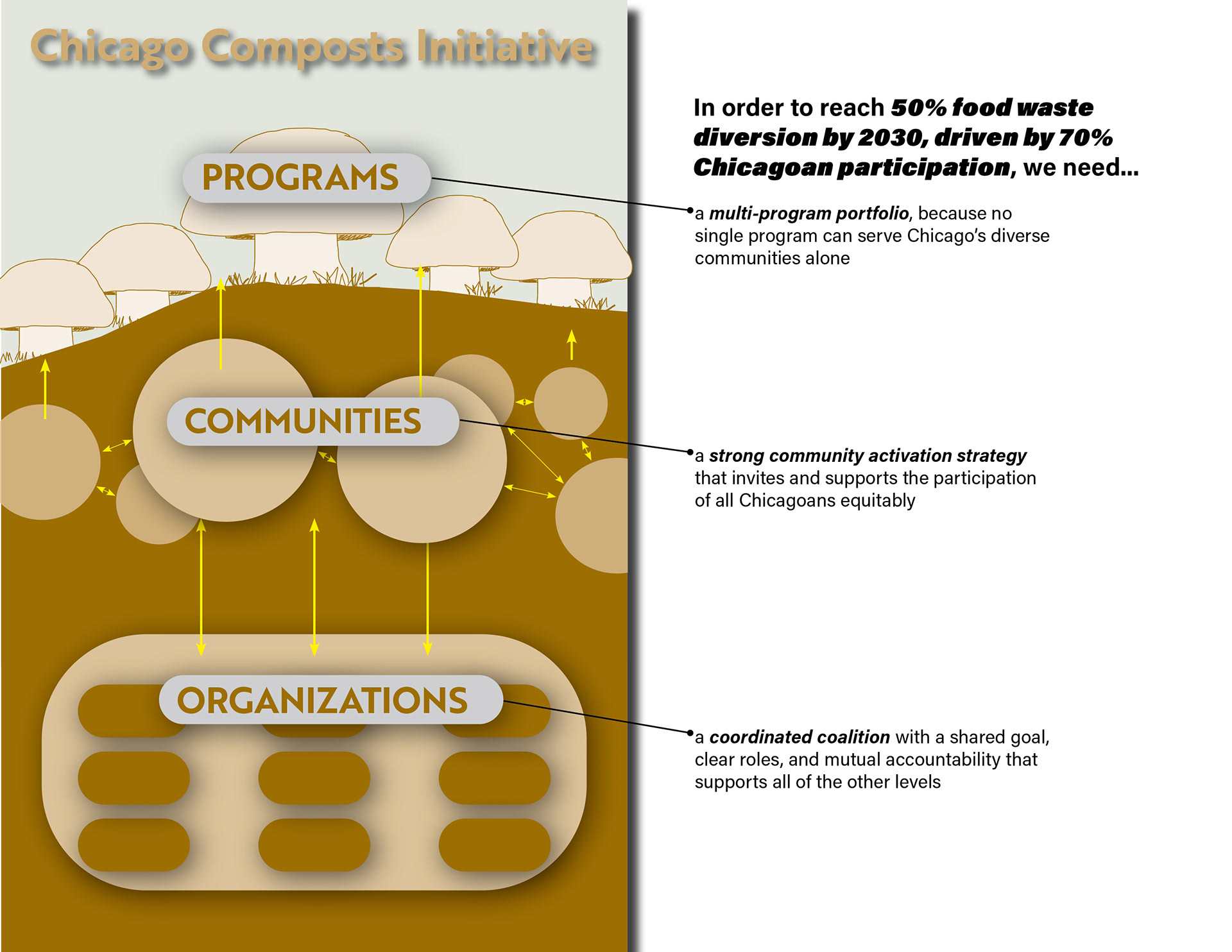
Final framework presented to DSS & DoE
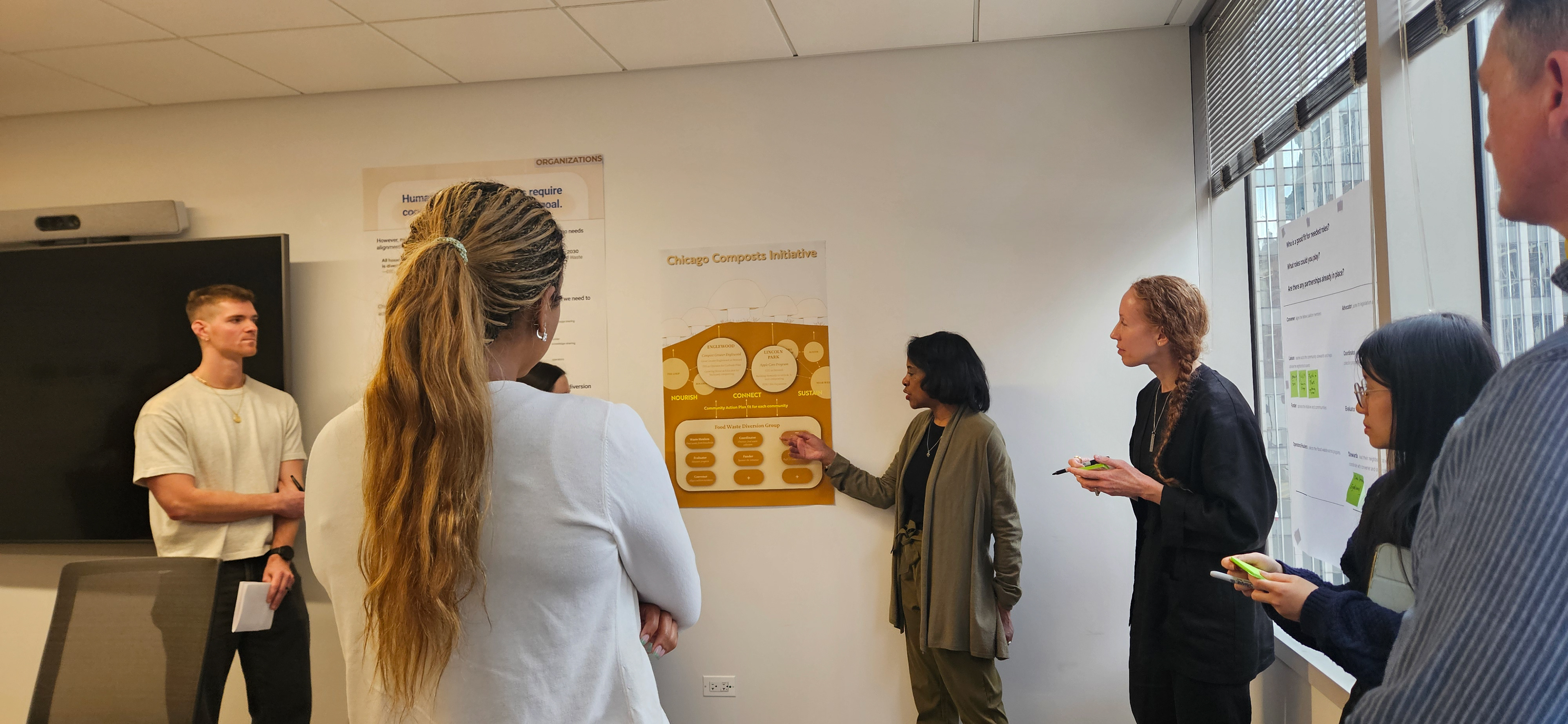
Making the presentation 'physical' to support participation
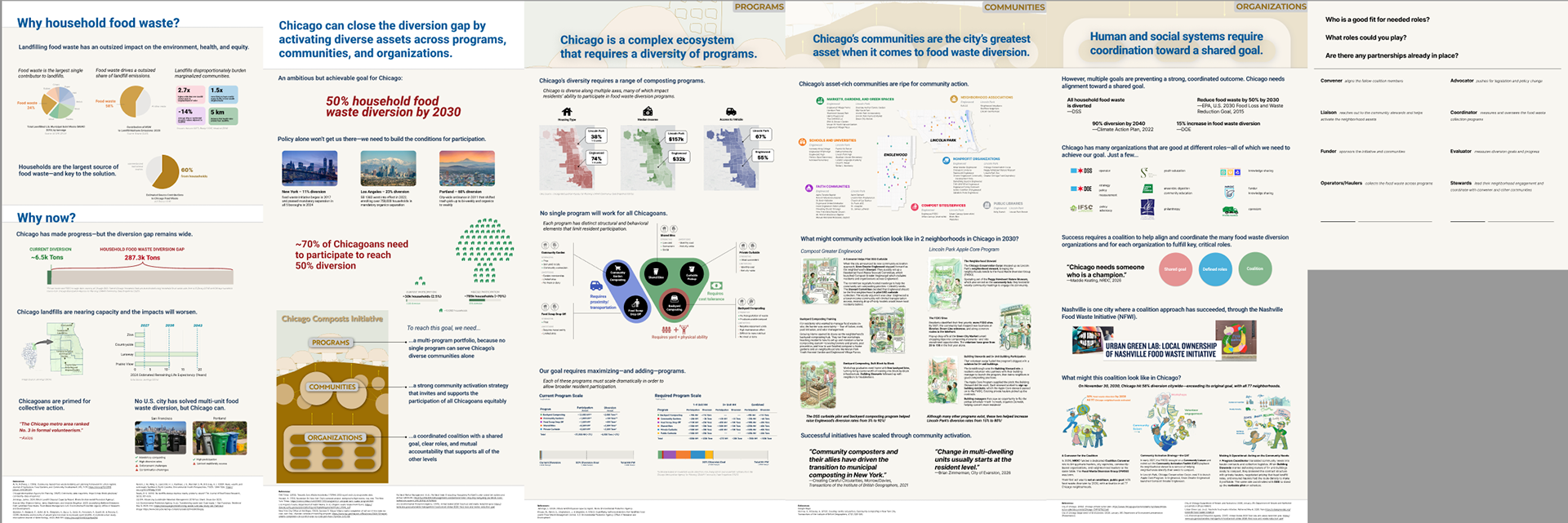
Figma mock-ups of the 5 boards, designed as 3' W x 6' H posters
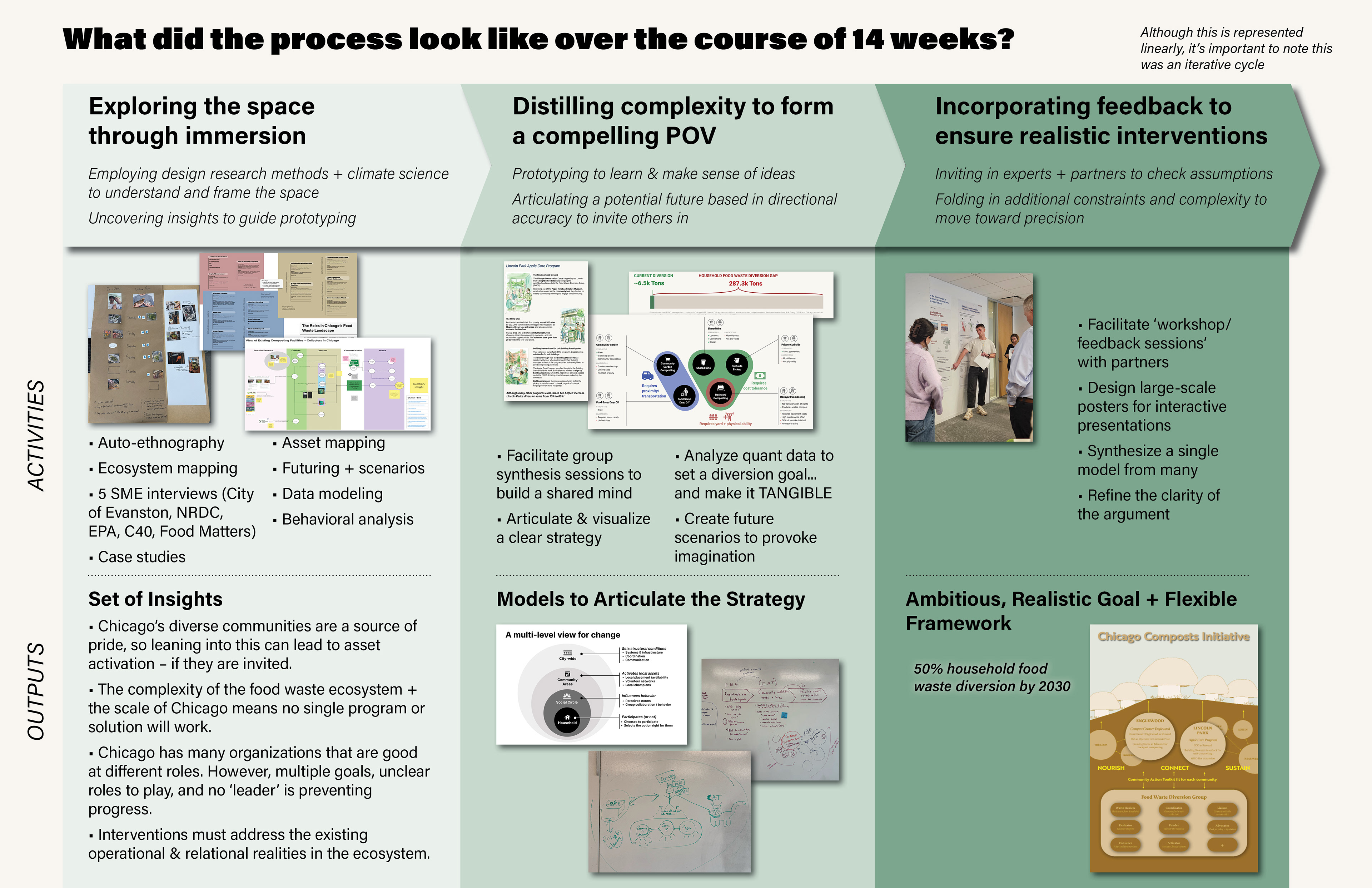
PROCESS
REFLECTIONS + LEARNINGS
1. Repetition is the key to expanding partners' imagination + buy-in. Reframing how a client sees their problem + building their confidence isn't a single "aha" moment, but rather occurs through sustained exposure and repetition. Share early and often.
2. Design's superpower is making your thinking tangible. Focusing on creating a visual model as well as physical presentations allowed for a clearer view of our logic, making it easier for
3. My strength is harnessing the power of conflict. Conflict is inevitable when you bring various viewpoints and mindsets to a project, but knowing how to guide the conversation and synthesize multiple truths leads to the strongest perspective.
4. At a time where technology has become the status quo, never underestimate the power of tech-free time. Whether it be team work sessions, a final pitch or critique, taking the technology out allows for greater engagement.
5. Humility and acknowledgement come before solutions. Approaching from a place of humility and empathy & taking the time to understand where friction or hesitation is coming from (i.e. operational, budget, imagination constraints) allows for design to thrive.
6. Design's capabilities are a powerful tool, especially in space it may not typically be seen. This project offered me the chance to evolve my practice in a space unfamiliar with design. My growth over the course of 14 weeks was exponential & offered me confidence in my ability as a designer to create meaningful change.
APPENDIX
Photos to elaborate on various portions of the project
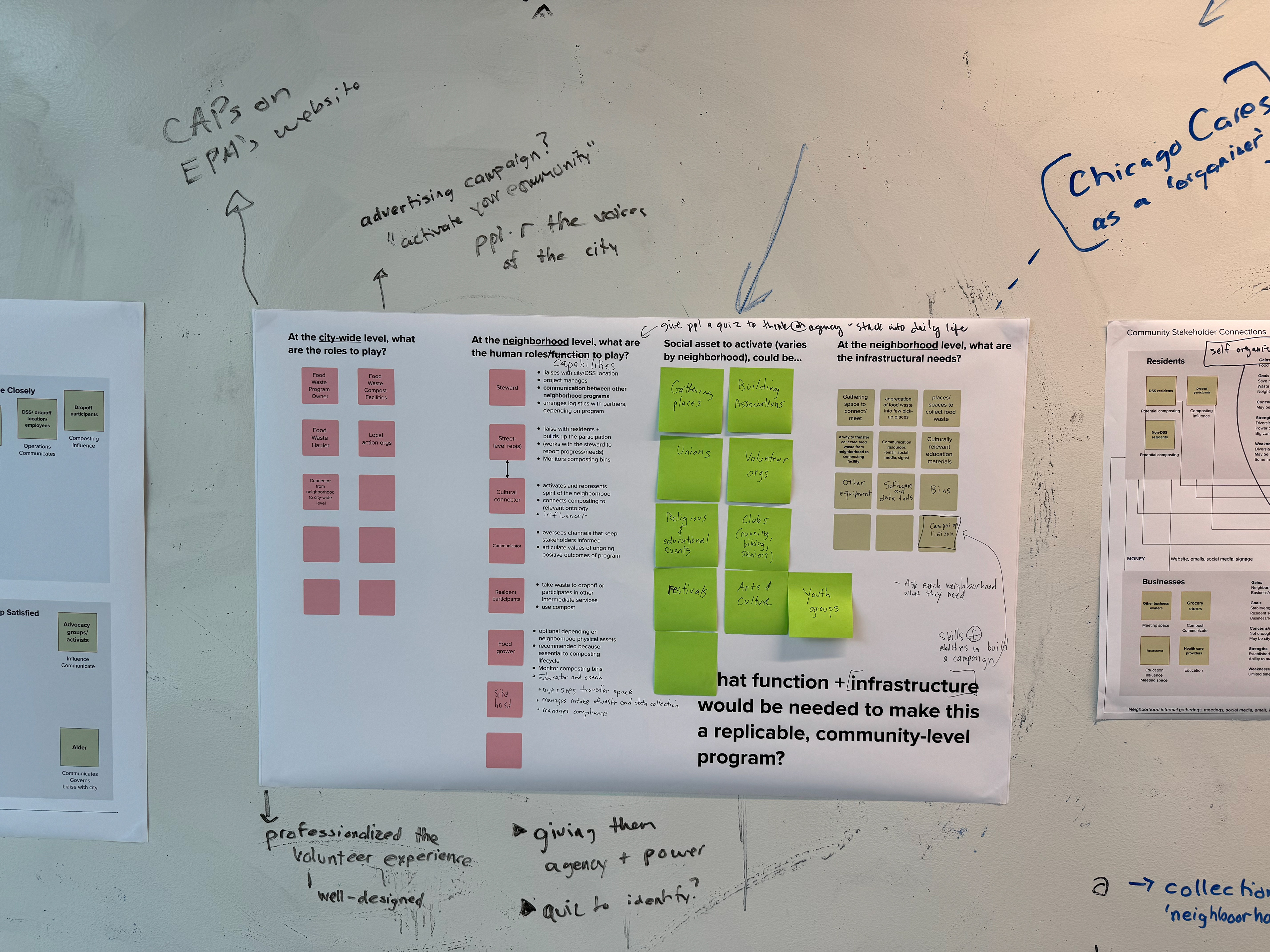
Bringing project partners into the work
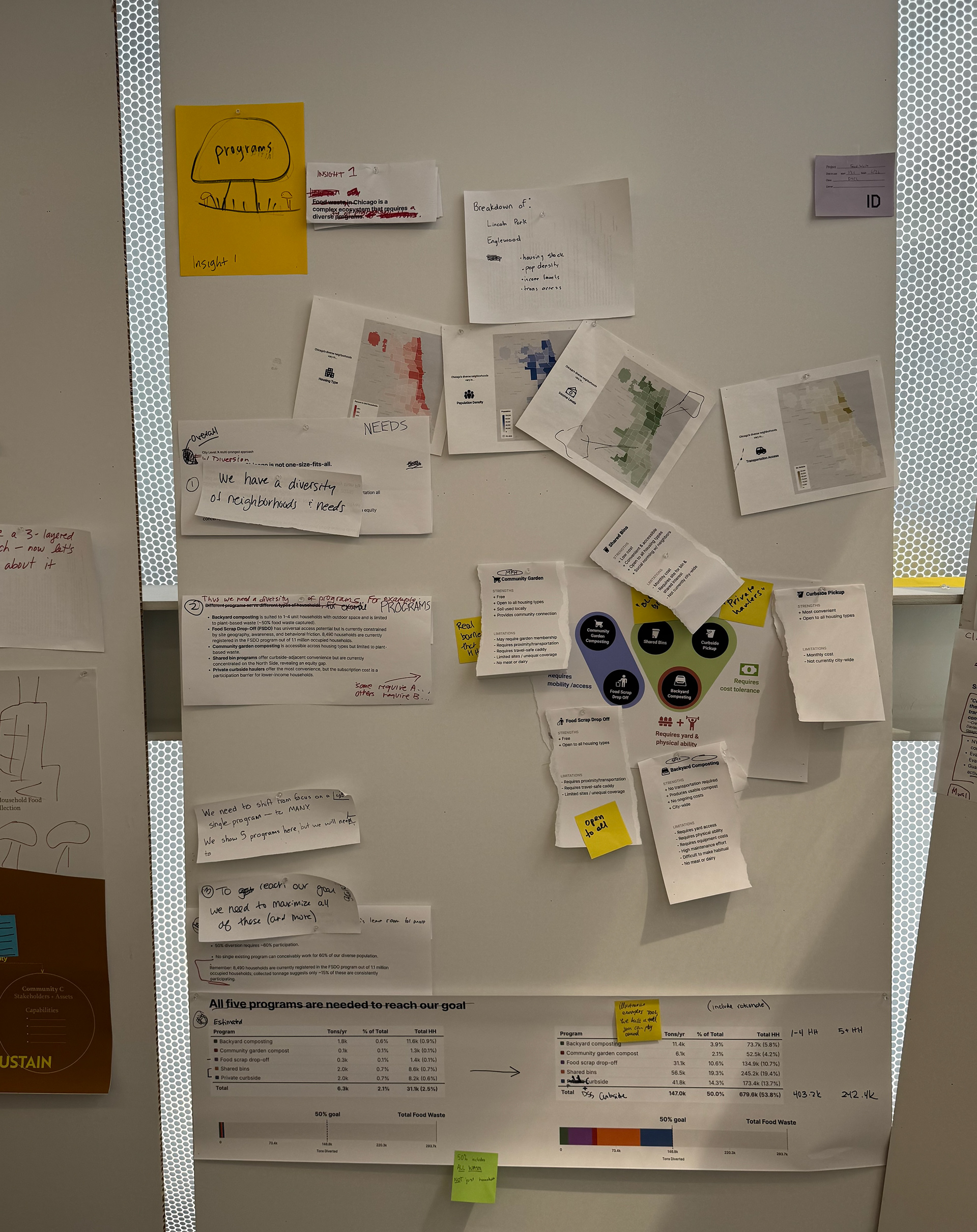
Team work session
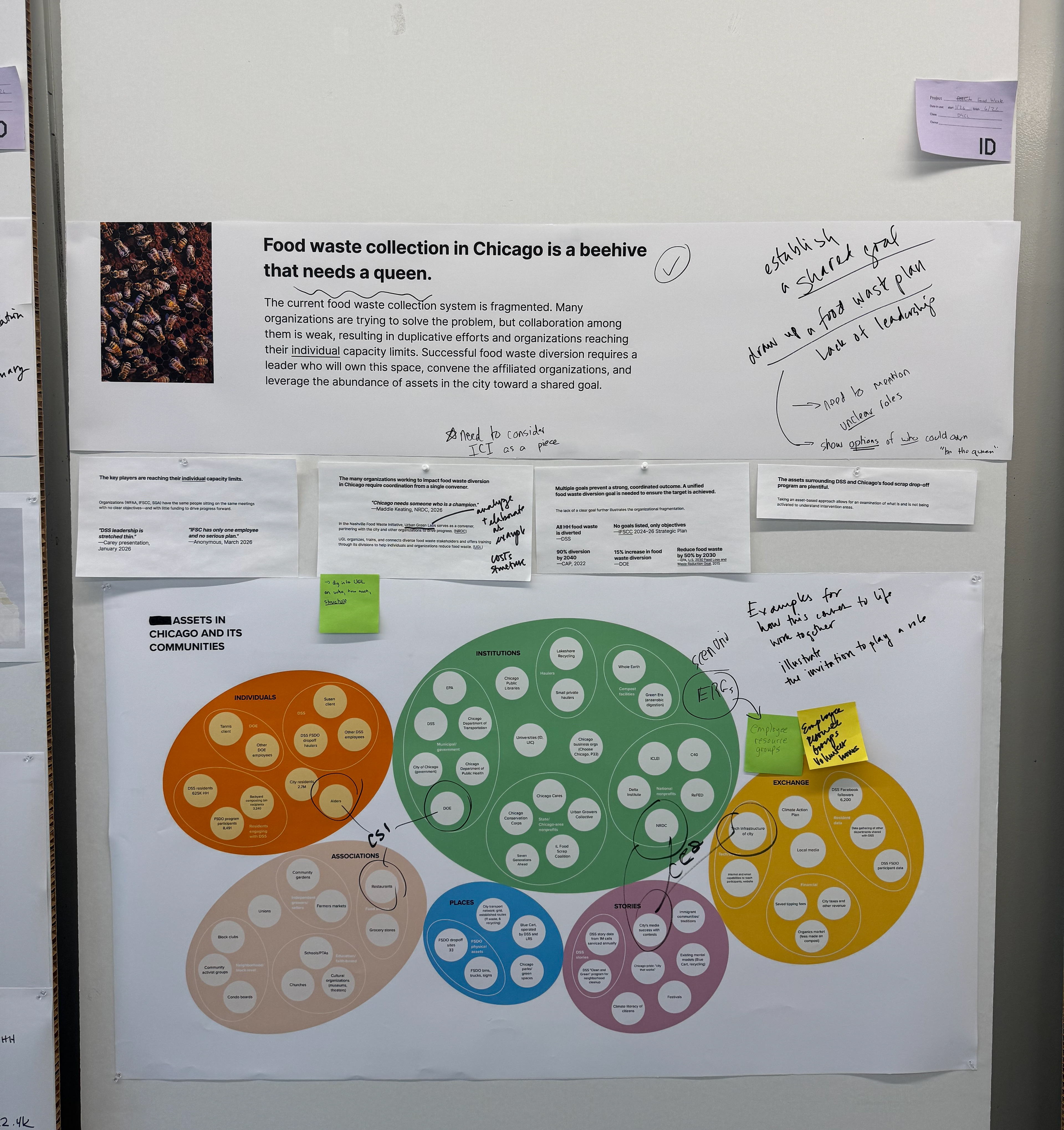
Sharing out with projects partners
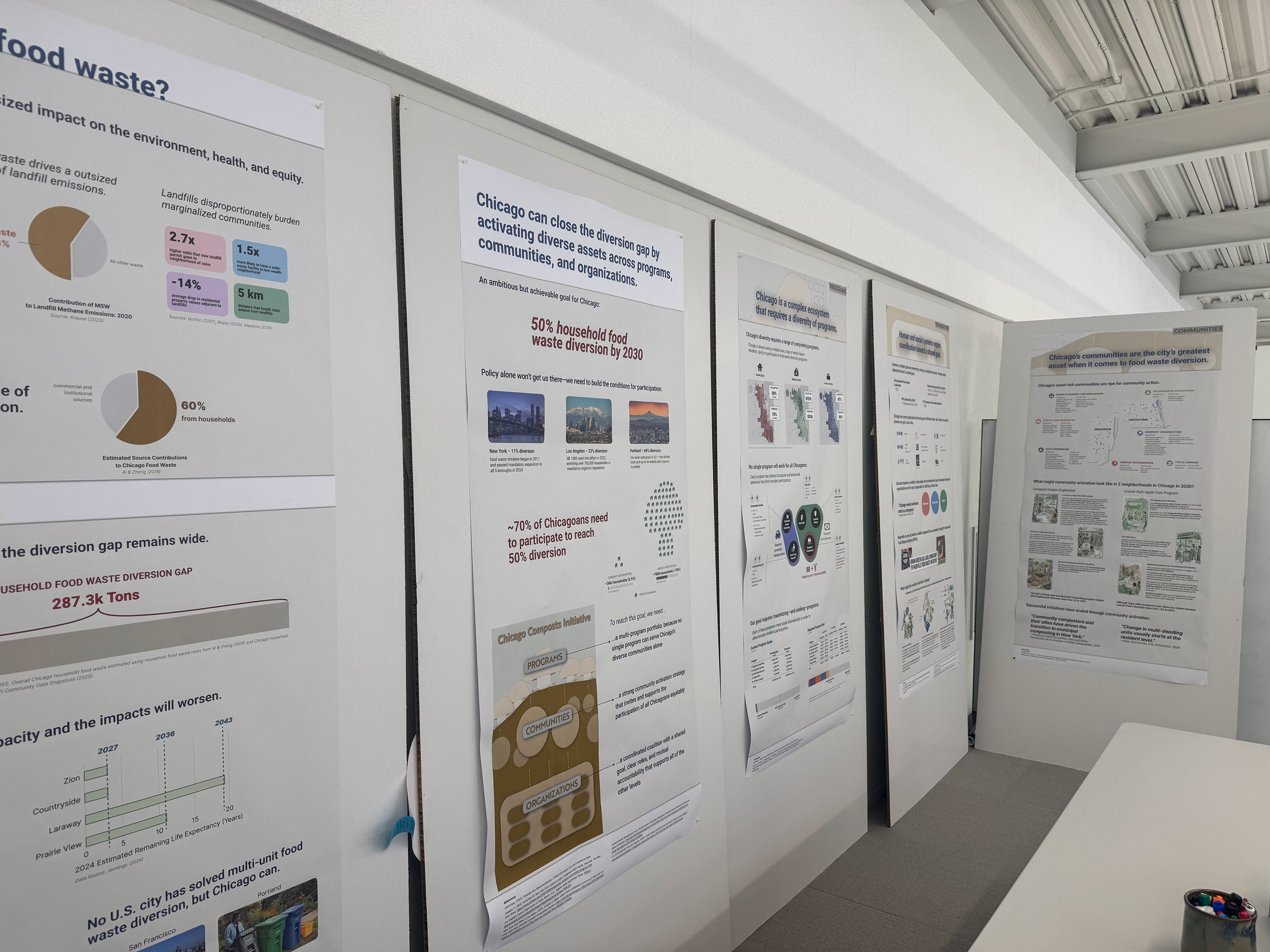
Final boards
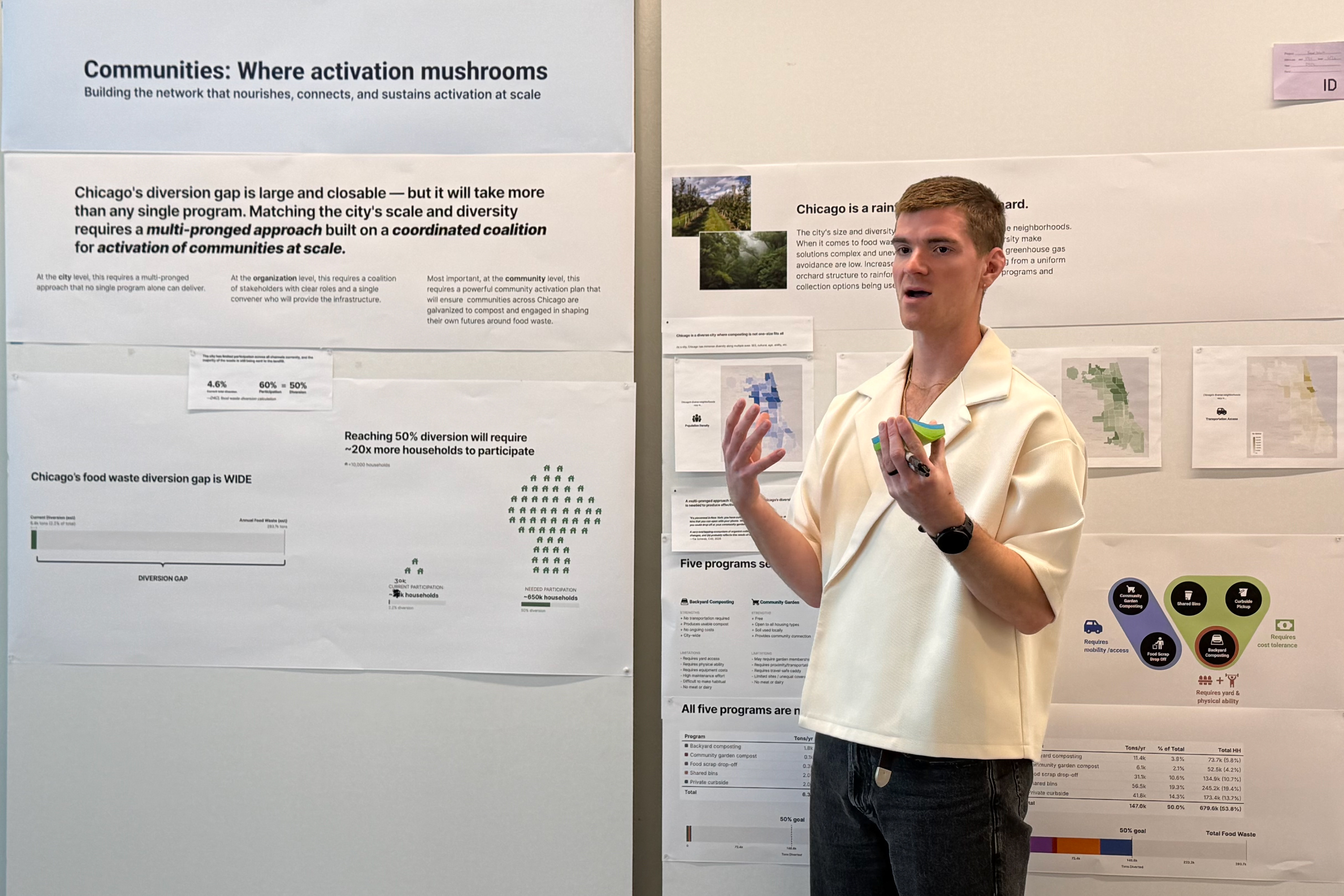
One of the three partner feedback sessions
Interested in learning more? Reach out to me!